
- Basic approach to Corporate Governance
- Diagram: System of Corporate Governance
- Effectiveness of the Board of Directors
- Status of Outside Officers
- Internal Control System
- Executive Compensation
Basic approach to Corporate Governance
With a view to improving the profitability and the capital efficiency of Nissui and its Group companies, as well as to promoting initiatives toward corporate social responsibility to encourage sustainable growth and the medium- to long-term enhancement of corporate value, the Board of Directors will demonstrate the major direction in corporate strategies and other matters and will place greater emphasis on supervising functions while retaining important decision-making functions.
The decision-making functions have been empowered to the Executive Officers (and Executive Committee) headed by the President & CEO, to speed up the decision-making process and to further separate supervising and execution.
Furthermore, in addition to the above management supervising by the Board of Directors, Nissui has adopted the governance structure of a company with an audit & supervisory board, based on its belief in the effectiveness of an audit system over management comprising four Audit & Supervisory Board Members including Outside Audit & Supervisory Board Members who are independent of management.
Diagram: System of Corporate Governance
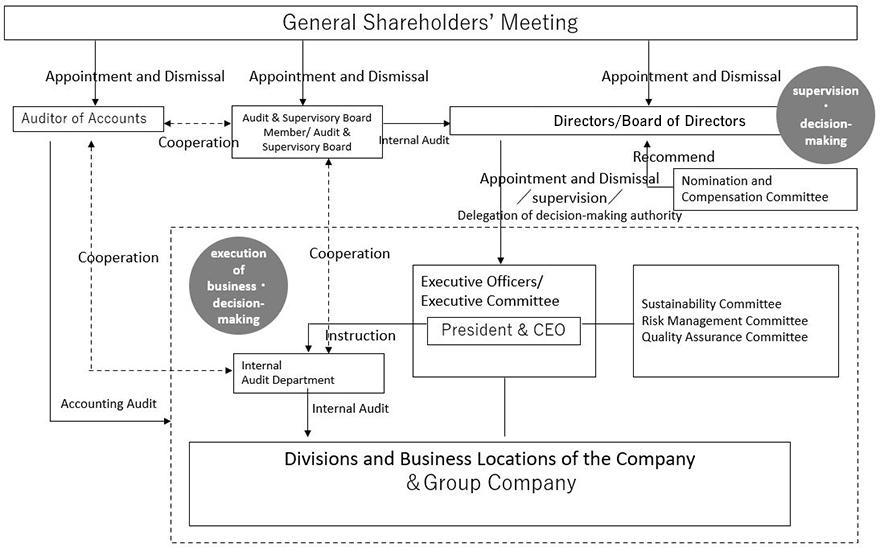
<Board of Directors>
The Board of Directors Meeting is held at least once a month in principle to determine material matters and supervise management. In order to enhance the transparency of management and strengthen the function of management supervision, Directors act with a term of office of one year. Currently, the Board of Directors consists of ten Directors and includes four Outside Directors (of which two members are women), who are independent of the management team.
<Nomination and Compensation Committees>
As an advisory body to the Board of Directors, the Company has established the voluntary Nomination and Compensation Committees (established on June 27, 2018), consisting of four Outside Directors and one Representative Director and chaired by an Outside Director. The Nomination Committee deliberates on the selection and dismissal of candidates for Officers including President and succession planning, and the Compensation Committee deliberates on the determination policy of compensation, details of the compensation system, and compensation standard, among other matters, in order to recommend to the Board of Directors. The Board of Directors determines officer appointments and compensation based on the recommendation.
Management Structure and Expected Areas of Expertise of Directors and Audit & Supervisory Board Members
| Name | Positions and responsibilities subject to approval | Corporate management |
Sustainability | International perspective |
Production and technology, R&D |
Marketing and sales |
Finance and accounting |
Human resources |
Risk management and legal affairs |
|---|---|---|---|---|---|---|---|---|---|
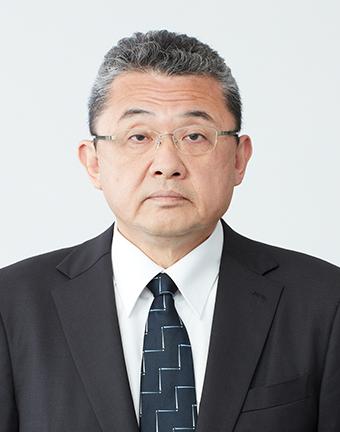 Tanaka |
Representative Director, President, Chief Executive Officer (CEO), Member of Nomination and Compensation Committee |
○ | ○ | ○ | ○ | ○ | ○ | ○ | |
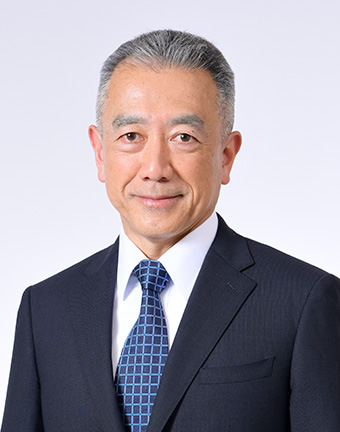 Asai |
Director, Senior Managing Executive Officer, Chief Operating Officer (COO) |
○ | ○ | ○ | ○ | ○ | |||
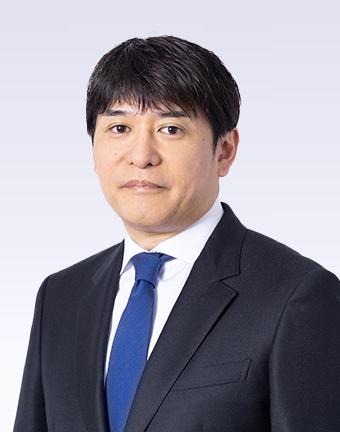 Hiroi |
Director, Executive Officer, Chief Financial Officer (CFO) |
○ | ○ | ○ | |||||
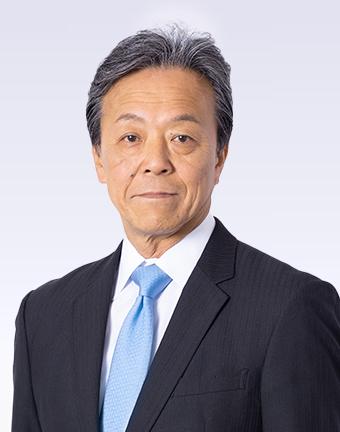 Inoue |
Director, Executive Officer, Chief Human Resources Officer (CHRO) |
○ | ○ | ○ | |||||
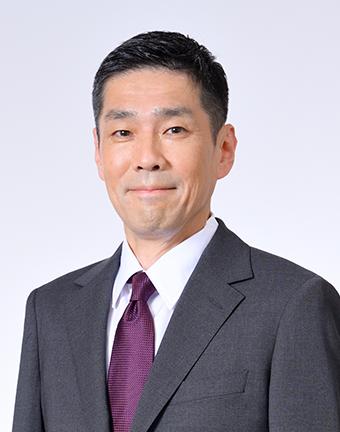 Kuraishi |
Director, Executive Officer | ○ | ○ | ○ | |||||
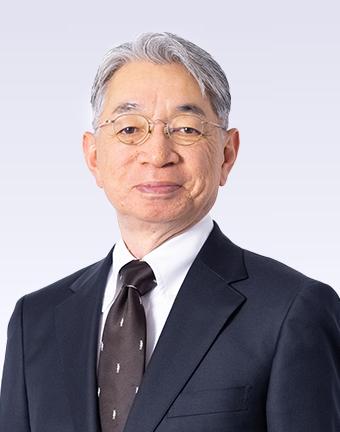 Nakano |
Director, Executive Officer | ○ | ○ | ||||||
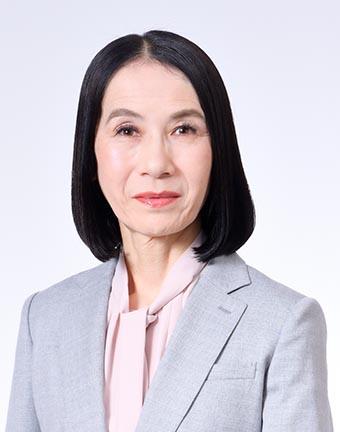 Eguchi |
Outside Director, Chairperson of Nomination and Compensation Committee |
○ | ○ | ○ | ○ | ||||
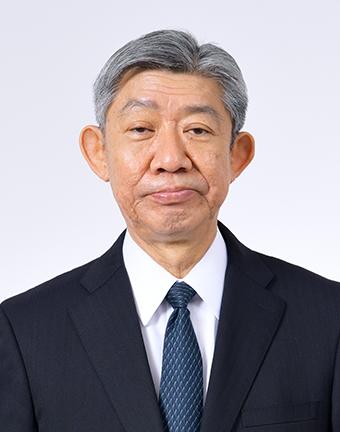 Abe |
Outside Director, Member of Nomination and Compensation Committee |
○ | ○ | ○ | ○ | ||||
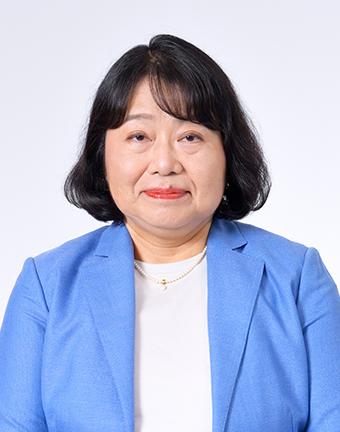 Tanaka |
Outside Director, Member of Nomination and Compensation Committee |
○ | ○ | ○ | |||||
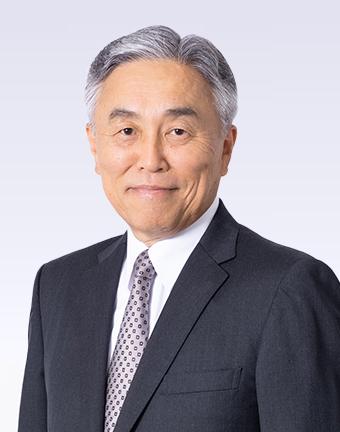 Ito |
Outside Director, Member of Nomination and Compensation Committee |
○ | ○ | ○ | ○ | ||||
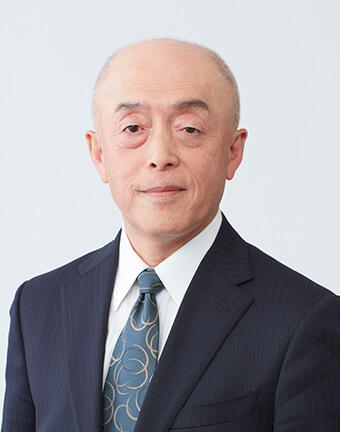 Hamano |
Standing Audit & Supervisory Board Member | ○ | ○ | ○ | |||||
 Terahara |
Outside Audit & Supervisory Board Member | ○ | ○ | ○ | |||||
 Jingu |
Outside Audit & Supervisory Board Member | ○ | ○ | ○ | |||||
 Tadokoro |
Outside Audit & Supervisory Board Member | ○ | ○ | ○ |
<Audit & Supervisory Board>
Regarding the audit system, the Company has appointed persons with the expertise necessary for audit including insight into finance and accounting as well as a wealth of knowledge in a wide range of fields. The Audit & Supervisory Board consists of four Audit & Supervisory Board Members including three Outside Audit & Supervisory Board Members (of which one member is a woman) independent of the management team. Each Audit & Supervisory Board Member attends the Board of Directors meetings to audit execution of duties of Directors, and also attends other important meetings including the Executive Committees as necessary.
<Executive Committee>
Regarding business execution, the Company has adopted the executive officer system (introduced on June 25, 2009) for flexible and efficient business management. The Executive Committee consisting of Executive Officers appointed by the Board of Directors is held at least once a month in principle, and makes quick and appropriate decisions and information sharing on major business execution matters, based on sufficient deliberation from a multifaceted perspective, in order to promote the sustainable growth and the enhancement of the corporate value of the Company and the Group.
The Executive Committee consists of 16 Executive Officers (including one female Executive Officer) including six Directors concurrently acting as Executive Officers.
<Internal Audit(Internal Audit Department)>
Based on annual planning, the internal auditing division under the direct control of President implements evaluation on internal control in order to ensure the reliability of internal audit and financial reporting of the Group, and reports results to Directors, Audit & Supervisory Board Members, and the managers of organizations under audit.
The internal auditing division reports the business audit results of Nissui and all its Group companies to the Audit & Supervisory Board Members, and in terms of internal control, discusses the evaluation procedure, scope, schedule, etc. with the external auditor of accounts when formulating the evaluation plan for the fiscal year and finalizes the evaluation policy. Furthermore, we ensure cooperation between the external auditor of accounts and the internal auditing division by closely exchanging information with the external auditor of accounts and taking appropriate corrections when any deficiencies or problems in control are found.
<Auditor of Accounts>
Regarding accounting audits, the Company has concluded an agreement with Ernst & Young ShinNihon LLC to conduct accounting audits based on the Companies Act and the Financial Instruments and Exchange Act.
Effectiveness Evaluation of the Board of Directors
The Company has evaluated the effectiveness of the Board of Directors through questionnaires and discussions each year since FY2016. From FY2021, the evaluation process has also incorporated individual interviews with newly appointed officers. The discussions are held separately from meetings of the Board of Directors and are facilitated by an Outside Director. They provide an opportunity to discuss and confirm the measures and implementation timeline for addressing the issues identified through the questionnaires.
<Timeline>
The Company evaluated the effectiveness of the Board of Directors ("effectiveness evaluation") for FY2025 on all executives (ten Directors and four Audit & Supervisory Board Members) in accordance with the following timeline.
- January 2026
- Conducted a questionnaire survey (4 levels with comments)
- February to March 2026
- Upon summarizing the questionnaire results, the secretariat conducted interviews with newly appointed Directors and identified issues
- April 2026
- Discussions separate from the Board of Directors were facilitated by an Outside Director
<The content of the questionnaire and a summary of the results>
(1) The content of the questionnaire
To understand the whole situation of the Board of Directors, the questionnaire comprised a total of 29 questions in the following five major categories. Each major category also had a free-description field where the respondent could write down comments and observations.
- i.Composition of the Board of Directors (size, number of members, diversity, the ratio of Internal and Outside Directors, etc.)
- ii.Operation of the Board of Directors and the support structure (annual schedule, the content and volume of meeting materials, the leadership of the Chairperson, etc.)
- iii.Agenda of the Board of Directors (number of agenda items and the content of the agenda items, the relevance of the criteria for submitting proposals to the Board of Directors, etc.)
- iv.Communication with third parties (the quality and the appropriateness of the content of disclosures to stakeholders, etc.)
- v.Training of Internal and Outside Directors
In addition to the above, this fiscal year respondents were also asked to provide comments on (i) matters that should be discussed by the Board of Directors and (ii) areas where the Board of Directors should improve.
(2) Summary of the results
[Overview]
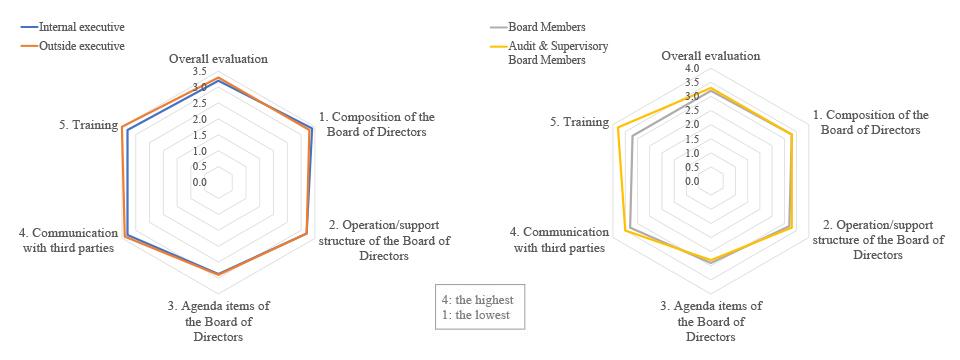
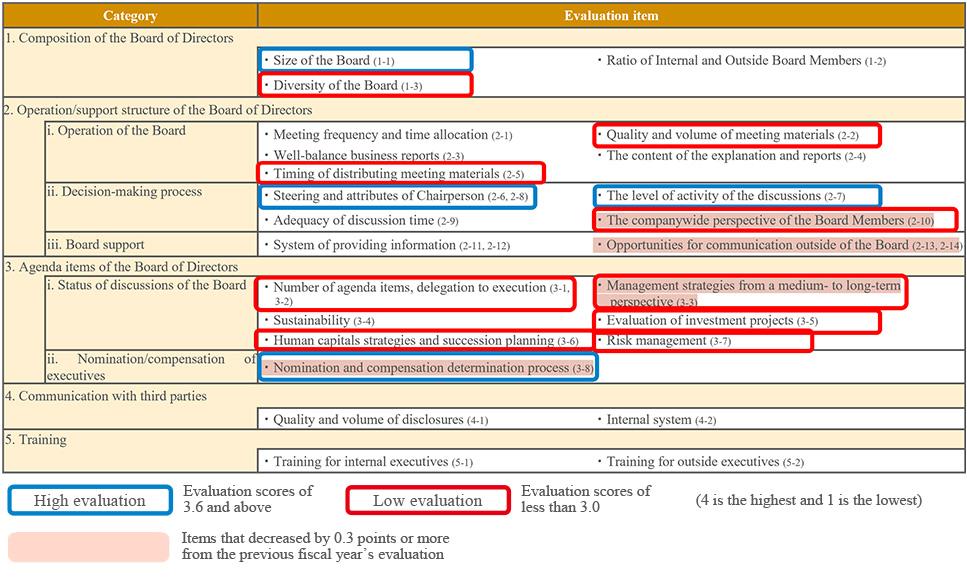
A comparison of the major categories indicated that, as in previous years, "iii. Agenda items of the Board of Directors" continued to score relatively lower than the other categories. In the Company, internal officers tended to be more aware of their roles and scored themselves more strictly in their self-assessments, resulting in lower scores for the internal officers than for the outside officers each year. Although there were no significant differences in the evaluations between the internal officers and outside officers, this fiscal year a clear difference emerged in "v. Training."
[Summary]
The high-scoring and low-scoring items and their numbers were mostly as per previous years, and "iii. Agenda items of the Board of Directors" continued to score low for many items. As reflected in the major category results, this year "v. Training" scored significantly lower than last year, primarily due to lower scores by internal officers. This is considered to reflect concerns that, although internal officers are aware of their roles as Directors, they have had insufficient opportunities to recognize and develop the skills and competencies required of Directors prior to assuming their positions.
<Issues identified through the questionnaire and interviews>
Upon summarizing the results of questionnaire and individual interviews, the following issues were identified.
- 1.Matters that should be prioritized for discussion at Board of Directors meetings and those that should not be prioritized, and the distinction between them
- 2.Medium- to long-term succession planning and human capital development
- 3.Improvement of the quantity, quality, and timing of materials provided for the Board of Directors meetings
<Summary of the discussion and next actions>
Facilitated by outside officers, discussions on the above issues were held as outlined below.
- 1.Matters that should be prioritized for discussion at Board of Directors meetings and those that should not be prioritized, and the distinction between them
The Board of Directors should devote more time to discussions from a company-wide perspective, including the allocation of management resources from a business portfolio perspective, management risks, governance, human capital, and other intangible assets. However, because many agenda items are, in accordance with the Company's internal rules, submitted to the Board after deliberation by the Executive Committee, Board discussions have tended to focus on individual matters as an extension of Executive Committee deliberations. In view of the relationship between the matters considered by the Executive Committee and the Board of Directors, as well as the roles each is expected to play, it was suggested that the current criteria for matters to be submitted to the Board be reviewed as one possible option. - 2.Medium- to long-term succession planning and human capital development
Although discussions on succession planning and human capital development at Board meetings remain insufficient, there was a consensus that the Board should discuss human capital (focusing on capabilities and skills rather than specific individuals) in alignment with the Company's mission and vision. Outside officers also shared examples of succession initiatives at companies whose nomination and compensation committee structures differ from the Company's, providing a number of useful points of reference for the Company.
Although this round of discussions did not reach the point of determining a specific direction, we believe the discussions were highly significant in establishing a shared understanding of the need for the Board to discuss succession planning and human capital. - 3.Improvement of the quantity, quality, and timing of distribution of materials for the Board of Directors meetings
The secretariat explained that it would revise the format of Board materials, hold briefing sessions on points to note when preparing such materials, and establish a stricter schedule for the submission of Board materials. In addition to revising the format, it was proposed that the key discussion points be summarized on a single A4 page, and it was decided to implement this proposal.
The large number of comments and suggestions received not only during the discussions but also through the questionnaire's open-ended comment section enabled more in-depth deliberations. Outside officers also shared examples of initiatives undertaken at other companies. Building on these insights, the Company will continue to consider and implement improvement measures aimed at further enhancing the quality of Board discussions.
Status of Outside Officers
Outside Directors
| Name | Reason for Appointment |
|---|---|
| Atsumi Eguchi | Ms. Atsumi Eguchi has engaged in research & development and public relations/communications divisions at major beverage and food manufacturing companies and has broad knowledge and abundant experience. The Company reappointed her as an Outside Director in the expectation that she will appropriately supervise overall management from a perspective of corporate communication and diversity at the Board of Directors meetings, etc. of the Company. |
| Daisaku Abe | Mr. Daisaku Abe has engaged in a wide range of operations such as IT, systems, and corporate planning at financial institutions over a long period of time and has broad expertise in sustainability, including having served as chairman of the Human Rights Enlightenment Promotion Committee. In addition to his experience supervising overall corporate management as a corporate manager of a financial institution, he has also served as an outside director of a listed company. The Company reappointed him as an Outside Director with the expectation that he would supervise the management of the Company from medium- to long-term, and comprehensive perspectives by leveraging his various experiences. |
| Keiko Tanaka | Ms. Keiko Tanaka has engaged in public relations and marketing departments at automotive manufacturing companies, and as a result gaining broad knowledge. In addition, she has global experiences such as having served as the Ambassador Extraordinary and Plenipotentiary of Japan to Uruguay. Since she also has experience as an Outside Director at a listed company and as an Outside Expert of the Sustainability Committee, the Company reappointed her as an Outside Director in the expectation that she would provide advice from a global perspective on sustainability and diversity, which are current challenges that the Company needs to address, and supervise overall management based on various experience. |
| Masahiko Ito | Mr. Ito has abundant corporate management experience including serving as Representative Director and President at a major listed manufacturer (non-ferrous metals and data center infrastructure). In addition to his track record of achieving a transition to a sustainable growth phase through execution of business structural reform and renewal of the management structure, he has advanced insight into corporate governance. The Company appointed him as an Outside Director in anticipation that he will provide recommendations and advices leveraging his various experiences at the Company's Board of Directors meetings, and supervise management from a medium- to long-term and broad perspective. |
The four Outside Directors all meet the independence requirements set by the Tokyo Stock Exchange and the "Independence Criteria of Outside Executives" set by the Company. There is no risk of conflicts of interest with general shareholders. The Company has determined that they are independent, designated them as independent directors according to the provisions of the Tokyo Stock Exchange, and notified the Exchange.
Outside Directors exchange information and opinions as necessary in response to reports from the Internal Audit Department.
Outside Audit & Supervisory Board Members
| Name | Reason for Appointment |
|---|---|
| Makiko Terahara | Ms. Makiko Terahara is well versed in corporate legal affairs as an attorney at law and serves as an Outside Director of other listed companies. She has professional expertise in determining the appropriateness of overall corporate activities. In addition, she serves as an Outside Audit & Supervisory Board Member of a listed company engaged in the department store business and possesses insights into the retailing business. The Company reappointed her as an Outside Audit & Supervisory Board Member in the anticipation that her advice based on her experience and insights would be effective for the Company to promote sustainability and attain diversity. |
| Tomoshige Jingu | Mr. Tomoshige Jingu has experience as a corporate manager and a full-time Audit & Supervisory Board Member of companies listed on the Prime Market of the Tokyo Stock Exchange, and as President and Representative Director of subsidiaries of a listed company. The Company newly appointed him as an Outside Audit & Supervisory Board Member in the anticipation that his advice based on his broad experience in sales, human resources, and other areas at financial institutions will be effective. |
| Takeshi Tadokoro | Mr. Takeshi Tadokoro has abundant experience as an accounting expert, including serving as a Representative Partner of a major audit firm as a certified public accountant. In addition, he has experience in advisory and human resources planning for financial reporting in the manufacturing, distribution, and service sectors at a major audit firm, and he has a wide range of personal connections and insight. The Company newly appointed him as an Outside Audit & Supervisory Board Member in the anticipation that he will provide advice and recommendations based on his experience and insight. |
Since all three Outside Audit & Supervisory Board Members meet the requirements for Independent Directors stipulated by the Tokyo Stock Exchange and the "Independence Criteria of Outside Executives" set by the Company, the Company has determined they are independent and there is no risk of conflicts of interest with general shareholders. So, the Company designated them independent directors according to the Tokyo Stock Exchange provisions and notified the Exchange.
Outside Audit & Supervisory Board Members receive regular reports from the Accounting Auditor on audit plans and results, witness some of the auditor's audits, and cooperate. In addition, necessary information and opinions are exchanged with the Internal Audit Department. The Internal Audit Department reports the results of the Group's operational audits to the Audit and supervisory Board Members.
Independence_Criteria_of_Outside_Executives (104KB)
Attendance at Board Meetings by Outside Directors and Audit & Supervisory Board Members, and their Activities
| Category | Name | Number of Board of Directors meetings attended | Number of Nomination and Compensation Committee meetings attended | Number of Audit & Supervisory Board meetings attended | Status of Key activities |
|---|---|---|---|---|---|
| Outside Directors | Tokio Matsuo | 22/22meetings | (Nomination) 5/5 meetings (Compensation) 7/7 meetings |
- | He has extensive experience and broad expertise as a corporate manager, including having served as representative director of an operating company. At the Board of Directors meetings, he provides advice regarding the Company's sustainability activities from medium- and long-term perspectives as well as makes management decisions and provides oversight appropriately from a broad-based perspective. In addition, as Chairperson of Nomination Committee and Compensation Committee, he leads fair and transparent operation of the Committee meetings regarding succession planning, the composition of the Board of Directors, the election of Directors and Audit & Supervisory Board Members and matters concerning compensation, etc. |
| Atsumi Eguchi | 22/22 meetings | (Nomination) 5/5 meetings (Compensation) 7/7 meetings |
- | She has broad knowledge and abundant experience, including having engaged in research & development and public relations/communications divisions at an operating company. She makes management decisions and provides oversight appropriately at the Board of Directors meetings from a multi-faceted perspective including corporate communication and diversity. In addition, she provides expert and specific advice on the election of Directors and Audit & Supervisory Board Members and the compensation system with consideration of recent trends and other companies' cases at the Nomination Committee and Compensation Committee meetings. | |
| Daisaku Abe | 22/22 meetings | (Nomination) 5/5 meetings (Compensation) 7/7 meetings |
- | He has abundant experience and broad knowledge, including having engaged in IT & systems and corporate planning at financial institutions for years and overseeing overall corporate management as a corporate manager. At the Board of Directors meetings, etc., he makes appropriate management decisions and provides oversight, such as providing comments on the optimization of the business portfolio and on financial strategies from a management perspective. In addition, he provides advice for improvements on the election of Directors and Audit & Supervisory Board Members and the compensation system with consideration of recent trends and other companies' cases at the Nomination Committee and Compensation Committee meetings. | |
| Keiko Tanaka | 21/22 meetings | (Nomination) 5/5 meetings (Compensation) 7/7 meetings |
- | She has broad knowledge and abundant experience, including having engaged in a public relations/marketing division at an operating company. She makes management decisions and provides oversight appropriately at the Board of Directors meetings from a global perspective including sustainability. In addition, she provides advice for improvements on the election of Directors and Audit & Supervisory Board Members and the compensation system with consideration of recent trends and other companies' cases at the Nomination Committee and Compensation Committee meetings. | |
| Outside Audit & Supervisory Board Members | Makiko Terahara | 21/22 meetings | - | 14/15 meetings | She has professional knowledge regarding corporate legal affairs as an attorney at law. Leveraging her professional expertise in determining the appropriateness of overall corporate activities, she provides comments as necessary from an independent and objective standpoint. |
| Tomoshige Jingu(Note) | 16/16 meetings | - | 10/10 meetings | In addition to the experience as a manager and Standing Audit & Supervisory Board Member at a listed corporation, he has broad knowledge and experience in sales and human resources at financial institutions. Leveraging this knowledge and experience, he provides comments to encourage effective and appropriate supervision of overall management from an independent and objective standpoint. | |
| Takeshi Tadokoro(Note) | 16/16 meetings | - | 10/10 meetings | He has professional knowledge regarding finance and accounting as a certified public accountant. Leveraging his abundant experience and expertise as an accounting expert, he provides comments as necessary from an independent and objective standpoint. |
* As of the end of March 2026
Note: Outside Audit & Supervisory Board Member Tomoshige Jingu and Outside Audit & Supervisory Board Member Takeshi Tadokoro have each assumed office as Outside Audit & Supervisory Board Members on June 26, 2025.
Internal Control System
Basic Policy for Internal Control System
Executive Compensation
Disclosure of Policy on Determining Compensation Amounts and Calculation Methods, etc.
The Company considers the executive compensation system to be a crucial component of corporate governance. Accordingly, in June 2018, it established a voluntary "Nomination and Compensation Committees," chaired by an Outside Director, while the Board of Directors has also established the following policy.
Basic Policy
- 1.The compensation system shall support the achievement of the Company's mission and long-term vision.
- 2.The compensation system shall be designed to eliminate short-term bias and motivate the medium- to long-term improvement of corporate value.
- 3.The compensation system shall be effective in maintaining and securing outstanding talents.
- 4.The compensation system shall be designed in a transparent, fair and reasonable manner from the standpoint of accountability to stakeholders including the shareholders and employees, and shall ensure appropriate determination processes.
- 5.The compensation system shall be aligned to the roles and responsibilities entailed by each rank and to performance.
<Method for the determination of compensation of Directors and Audit & Supervisory Board Members>
The policy for determining compensation, etc. of individual Directors is determined by the voluntary Compensation Committee which is chaired by an Independent Outside Director and consists of four Outside Directors and one Representative Director (Chairperson: Atsumi Eguchi), with the aim of ensuring compensation commensurate with the company's stage. Specifically, it is determined by the Board of Directors upon deliberation of (i) the basic policy for compensation; (ii) the compensation system; (iii) the compensation levels; and (iv) compensation item composition ratio; among other things, based on comparative verification against benchmark groups. The amount of each compensation to be paid shall be determined by the Compensation Committee delegated by the Board of Directors from the viewpoint of the objectivity and transparency of the operation of said system.
With respect to compensation, etc. of Audit & Supervisory Board Members, the amount of basic compensation (fixed compensation) shall be determined through discussions among the Audit & Supervisory Board Members, and shall be within the range of the total amount of compensation, etc. approved by the General Shareholders' Meeting in advance.
<Compensation system, calculation System, and determination Process>
Compensation of Directors (excluding Outside Directors) consists of three components, namely, "basic compensation," "performance-linked compensation," and "stock-based compensation." Outside Directors and Audit & Supervisory Board Members receive only basic compensation (fixed compensation). Until FY2022, the ratio between each compensation of Directors was roughly targeted at 65:30:5 when business performance targets are fully achieved. From FY2023, in order to raise awareness among Directors of improving business performance and increasing corporate value over the medium to long term, the design of the system has been changed to set the ratio to 55:25:20 when business performance targets such as consolidated ordinary profit, etc. and other KPIs of the Medium-Term Management Plan are fully achieved. Thus, the ratio of performance-linked variable compensation (performance-linked compensation and stock-based compensation) has been raised to approximately half of the total.
The retirement benefit system for Directors and Audit & Supervisory Board Members was abolished on the day of the 92nd Ordinary General Shareholders' Meeting held on June 27, 2007.
<Compensation system for Directors in FY2025>
| Type of compensation | Basic compensation | Variable compensation | |
|---|---|---|---|
| Performance-linked compensation | Stock-based compensation | ||
| Contents | Fixed compensation in accordance with rank | Compensation in which the total amount of payment is determined based on the total amount of dividends or consolidated ordinary profit for the fiscal year, and allocated and paid in accordance with job rank by adding individual evaluations. | Compensation in which the total amount of payment is determined based on the achievement ratio of the Medium-Term Management Plan, and paid in the form of the Company's stock in accordance with job rank and individual evaluations. |
| Eligible for payment | Internal Directors / Outside Directors | Internal Directors only | Internal Directors only |
| Payment timing | Monthly | Twice a year | At a certain time after the end of each eligible period or at the time of retirement (*Transfer is restricted: until the date of retirement from all positions as Director, etc. (provided, however, that if the recipient, upon retirement as a Director, etc., continues in office as an Audit & Supervisory Board Member, until the day on which such Audit & Supervisory Board Member retires)) |
| Payment method | Cash | Cash | Stock (at a certain time after the end of each eligible period or at the time of retirement) and cash (only at the time of retirement) |
| Method for determining the amount of payment | Consolidated ordinary profit or the total amount of dividends, each multiplied by a certain percentage, whichever is smaller, is the basic amount of payment. | Corporate performance achievement rate is determined for the Medium-Term Management Plan period | |
| The basic amount of payment is allocated in accordance with job rank and individual payment is determined in accordance with the achievement rates of business performance targets within the range of 80% to 120%. | Predetermined base points for each job rank is multiplied by a determined corporate performance achievement rate, which will be adjusted by individual achievement rates of financial and non-financial targets within the range of 80% to 120%. | ||
| Ratio (guidelines) *In the case that consolidated ordinary profit, which is a financial KPI of the Medium-Term Management Plan, reaches 43.0 billion yen |
50% | 20% | 30% |
<Compensation, etc. of Directors>
Basic compensation
Basic compensation consists of three components, namely, representative consideration, supervisory consideration and executive consideration, and executive consideration is set according to the job rank.
Performance-linked compensation

Performance-linked compensation is paid to Executive Officers based on the idea that the compensation is distribution of added value generated in a single fiscal year.
This compensation uses "consolidated ordinary profit," which is a performance evaluation indicator, and "total amount of dividends" conscious of shareholders' perspectives as indicators. Consolidated ordinary profit or the total amount of dividends, each multiplied by a certain percentage, whichever is the smaller amount, is used as the basic amount of the compensation, which is then allocated and paid in accordance with the job rank based on individual evaluations. As the compensation composition ratio is set based on the timing when the Medium-Term Management Plan is achieved, if consolidated ordinary profit or total amount of dividends, which is conscious of shareholders' perspectives, is increased or decreased, the ratio of performance-linked compensation in total compensation is designed to be increased or decreased accordingly.
Evaluation for each individual was introduced in FY2021 with an aim to clarify the degree of contribution of each officer to the business performance for a single fiscal year. Certain business performance targets, including sustainability targets, have been selected as evaluation items, and achievement rates are evaluated against those items within the range of 80% to 120%. The basic amount of performance-linked compensation paid, the allocation rate by job rank, and evaluation for each individual shall be determined by the Board of Directors after deliberation by the Compensation Committee.
Stock-based compensation
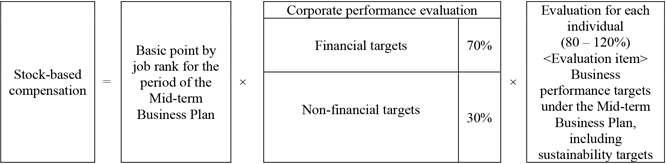
Evaluation items and evaluation weight for stock-based compensation
The following evaluation items have been established for stock-based compensation, in conjunction with the commencement of the new Medium-Term Management Plan "GOOD FOODS Recipe 2" in FY2025. Specifically, "ROE" has been added in order to further reinforce the shareholder perspective, and "achievement rate of the target for priority risk responses" in order to strengthen risk response capabilities.
| Evaluation items for stock-based compensation | ||
|---|---|---|
| Items | Reasons for selection | |
| Financial | Net sales Consolidated ordinary profit ROIC ROE |
Improvement of growth potential Improvement of profitability Improvement of capital efficiency Further reinforce the shareholder perspective |
| Sustainability | Achievement rate of the target for sustainability of marine resources Reduction in CO2 emissions at the Group's business sites Improvement in scores of mission preparation in employee engagement Achievement rate of the target for priority risk response |
Conducting sustainable procurement Contribution to actions toward climate change and preservation of the marine environment Active roles undertaken by diverse human capital Strengthening risk response capabilities |
As detailed above, financial and non-financial (sustainability) items have been selected for evaluation of corporate performance, and their weightings have been set to 70:30. Financial targets are evaluated based on the percentage of achievement in accordance with actual results, while non-financial (sustainability) targets are evaluated within the range of 50% to 150%. The number of shares to be granted to individuals is determined by multiplying the predetermined base points for each job rank by corporate performance achievement rates, and then reflecting the individual evaluations. For individual evaluations, KPIs and sustainability items under the Medium-Term Management Plan are used, and the achievement rates are defined within the range of 80% to 120%. The corporate performance achievement rates and the individual evaluations shall be determined by the Board of Directors after deliberation by the Compensation Committee.
The total amount of remuneration, etc. by category of officers for FY2025, the total amount by type of remuneration, etc., and the number of officers subject thereto
The policy regarding the determination of the details of compensation, etc. for each individual Director, was decided by the Board of Directors after deliberation by the Compensation Committee, which is chaired by an Independent Outside Director. The amount paid to each individual for the fiscal year under review was determined by said Committee, under delegation by the Board of Directors, based on said policy; therefore, the Board of Directors has determined that it is in line with said policy and appropriate.
| Category of Officers | Total amount of compensation, etc.(in millions of yen) | Total amount by type of compensation, etc. (in millions of yen) |
Number of Officers paid | ||
|---|---|---|---|---|---|
| Basic compensation | Performance-linked compensation | Stock-based compensation | |||
| Directors (excluding Outside Directors) |
399 | 229 | 77 (Note 1) | 92 | 7 (Note 2) (Stock-based compensation: 8) (Note3, Note5) |
| Audit & Supervisory Board Members (excluding Outside Audit & Supervisory Board Members) |
26 | 26 | - | - | 1 |
| Outside Directors | 52 | 52 | - | - | 4 |
| Outside Audit & Supervisory Board Members | 36 | 36 | - | - | 5 (Note 4) |
Notes:
- 1.The performance-linked compensation of Directors includes the amount estimated to be paid in June 2026.
- 2.The number of Officers paid includes one Director who retired on June 26, 2025.
- 3.The number of Officers paid for stock-based compensation includes, in addition to the above one Director, one Director who retired on June 26, 2024.
- 4.The number of Officers paid for compensation for Outside Audit & Supervisory Board Members includes two Audit & Supervisory Board Members who retired on June 26, 2025.
- 5.Status of shares delivered to Officers of the Company as compensation for the performance of their duties during the current fiscal year.
Based on the stock-based compensation system, 154,100 shares were delivered to six Directors, excluding Outside Directors, as shares corresponding to points granted during the eligible period (FY2022 to FY2024), and 41,700 shares were delivered to two retired Directors.
Deliberation Overview of Compensation Committee in FY2025
| Deliberation overview |
|---|
|